
Most steel orders go wrong before the truck ever leaves the yard. A buyer skips a quantity check, assumes a verbal grade claim is accurate, or forgets to confirm delivery timing against the pouring schedule, and by the time the mistake surfaces, it is already sitting on site or worse, already cast into the structure. At Mangla Steels, the orders that go smoothly almost always share one thing in common: the buyer walked in already knowing what to ask. Here is exactly what an experienced procurement team checks before confirming a steel order, in the order it actually needs to be checked.
Start With Your Project Requirements, Not the Price List
Before contacting any supplier, get clear on what the structure actually demands. Pull the structural drawing and the bar bending schedule if one exists. A residential footing, a commercial mezzanine floor, and an industrial shed frame all call for different combinations of TMT bars, structural sections, and sheet products, and ordering before this step is settled is how buyers end up with the wrong grade or an odd leftover bundle nobody can use elsewhere on site.
If drawings are not finalized yet, at minimum get the seismic zone classification from your engineer. This single detail decides whether you need Fe 500, Fe 500D, or Fe 550D grade TMT bars, and it changes both the price and how quickly a supplier can actually fulfill the order once you place it.
Identify the Exact Steel Products Your Project Needs
Once the requirement is clear, break the order into categories instead of treating it as one lump steel purchase. TMT bars carry the reinforced concrete work. Structural sections handle framing, trusses, and support work. Pipes cover plumbing and light structural columns. Sheets cover roofing and cladding. Getting this breakdown right upfront avoids a common and expensive mistake: over-ordering one category because it was easy to estimate, while under-ordering another that gets forgotten until the crew is already on site waiting.
If you want a sense of how different brands stack up on grade availability and certification before you commit to one, this ranking of TMT bar brands is worth a read ahead of finalizing your supplier shortlist.
Verify Quality and Manufacturing Standards Before You Commit
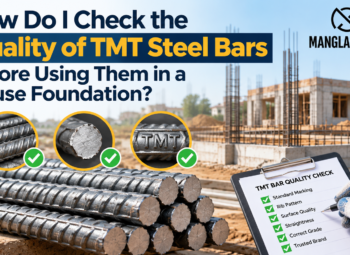
This is where experienced buyers slow down, even when they are in a hurry. Genuine TMT bars show consistent, sharp ribbing along the full length, with no patchy texture that suggests the bar was rolled from mixed or reprocessed scrap. Weight is the next check. Steel has a known theoretical weight per meter for every diameter, and a bundle that comes in noticeably light usually means the actual cross-section is smaller than what the label claims.
For structural sections and pipes, wall thickness matters more than outer dimensions. A pipe with the correct outer diameter but thin walls will still fail the strength test it is supposed to pass, and buyers who only check diameter miss this every time. Ask the supplier directly whether they will let you verify thickness with a gauge on delivery. A supplier who welcomes that question is usually confident in what they are shipping.
Check Certifications and Material Test Reports Before Payment
Every batch of TMT bars should come with a mill test certificate covering chemical composition and mechanical properties, tested against IS 1786. Request this for the specific batch being delivered, not a general certificate from an earlier shipment. BIS certification should be physically embossed on the bar, and the license number takes about two minutes to cross-check on the BIS website, which is a small effort against the risk of a mislabeled batch.
Structural sections should reference IS 2062 for grade and yield strength, and galvanized sheets should specify coating class under IS 277, since coating weight is what actually determines corrosion resistance rather than the visible shine on the sheet. If a supplier cannot produce batch-specific documentation before payment, that hesitation is worth taking seriously rather than working around.
Put Every Specification in Writing
Verbal confirmation of grade, diameter, or thickness is not worth much if a dispute comes up later. Every detail discussed on a call or in person should also appear on the purchase order: exact grade, diameter or thickness, length, quantity, brand, and price per unit. This single habit prevents the most common post-delivery argument, which is a mismatch between what was promised and what showed up on the truck.
For structural work involving beams and channels, this guide to MS channels sizing is worth reviewing before finalizing quantities, since channel and beam sizing get confused often enough that it is worth double-checking against the drawing rather than assuming.
Calculate Quantity Correctly to Reduce Wastage
Ordering by rough area estimate rather than the actual bar bending schedule is one of the most consistent sources of both shortages and unusable surplus. Work from the BBS where one exists, and add a realistic wastage allowance, typically five to eight percent, for cutting and bending losses rather than guessing at a round number. For sheet products, calculate coverage including overlap requirements, since overlap can add ten to fifteen percent to the real requirement depending on the sheet profile.
Compare Supplier Quotations Beyond Just Price
Two quotations for the same tonnage are not automatically comparable. Normalize every quote for identical brand, grade, and certification level before looking at price, because a lower quote for an unstated grade is not actually a better deal, it is a different product being compared against the wrong baseline. Ask each supplier the same three questions: which mill does this steel come from, can the mill test certificate be provided before payment, and what happens if a tested sample fails to meet the stated grade. Suppliers who answer all three directly are giving you real information.
Confirm Delivery, Storage, and Supplier Reliability
Confirm delivery timing against your actual construction schedule, not just a general “within a week” assurance, and ask whether the material will be covered during transit. For larger structural sections like MS beams, confirm the vehicle and unloading arrangement can actually handle the length and weight involved, since this is an easy detail to overlook until a truck arrives that cannot maneuver into the site.
Have the storage area ready before delivery, not after. Steel should sit on wooden sleepers off the ground, away from standing water, and under cover if it will not be used within a few days. A yard visit, even for a modest order, tells you a lot about how seriously a supplier treats quality control before it ever reaches you. This kind of consistency across every order, not just the first one, is one of the reasons contractors across Punjab continue working with
Common Ordering Mistakes That Increase Project Costs
Ordering by weight alone without confirming diameter tolerance is a recurring mistake, since two bundles of identical stated weight can carry different real load-bearing capacity if one is slightly underweight per meter. Trusting a verbal brand or grade claim without checking embossing or requesting documentation is another. Skipping a sample test on large orders is a mistake most buyers make exactly once before changing their process permanently, and choosing a supplier purely on the lowest quoted number without checking certification history is a habit that works fine until the one time it does not.
Final Pre-Order Checklist
- Confirm exact grade from the structural drawing or engineer
- Break the order into product categories rather than one lump purchase
- Verify surface quality, ribbing, and weight against the theoretical standard
- Request the mill test certificate for the specific batch before payment
- Confirm BIS/ISI marking is physically present and cross-check the license number
- Put every specification, grade, and quantity in writing on the purchase order
- Calculate quantity from the bar bending schedule with a wastage allowance
- Compare quotations only after normalizing for identical grade and brand
- Confirm delivery timeline and prepare storage before the truck arrives
Frequently Asked Questions
- How do I confirm steel quality before accepting delivery?
A: Check surface ribbing consistency, verify weight against the theoretical standard for that diameter, and request the mill test certificate for the exact batch. - Which documents should I request before making payment?
A: The mill test certificate, the BIS license number for TMT bars, and a delivery challan matching the invoiced quantity, grade, and brand. - How do I compare quotations from different suppliers?
A: Normalize every quotation for identical brand, grade, and certification before comparing price per unit. - How can I calculate the correct quantity for my project?
A: Work from the bar bending schedule, not a rough area estimate, and add a 5-8% wastage allowance for cutting and bending losses. - How can I identify a reliable construction steel supplier?
A: Look for the same quality and documentation on every order, not just the first, plus straight answers to direct sourcing questions. - What are the warning signs of substandard steel?
A: Uneven ribbing, missing or blurred BIS embossing, underweight bars for the stated diameter, and cracking on a simple bend test.
Final Buying Advice
Ordering steel well is mostly about sequencing: know what your structure needs before you call a supplier, verify quality and documentation before you pay, and confirm delivery and storage arrangements before the truck leaves the yard. If you are finalizing quantities or comparing grades for an upcoming project, the team at Mangla Steels is available to walk through exactly what your order needs before you confirm it.